During the journey of pregnancy, every expectant parent hopes and prays for one fundamental thing: a healthy, thriving baby. Between weeks 15 and 20 of gestation (the second trimester window), your obstetrician will sit you down and recommend a vital genetic screening: the Triple Marker or Quadruple Marker Blood Test.
Hearing words like "chromosomal abnormalities" and "Down syndrome risk" can trigger panic. But understanding what this test actually does—and why it is purely a statistical risk assessment rather than a diagnosis—will give you confidence and peace of mind.
What is the Quadruple Marker Test?
The Quadruple Marker is an advanced maternal serum blood test that measures four specific substances produced by your baby and the placenta:
- Alpha-Fetoprotein (AFP): A protein made by the baby's liver. Abnormal levels flag potential neural tube defects like Spina Bifida (incomplete closing of the spine).
- Total hCG (Human Chorionic Gonadotropin): Produced by the placenta. Elevated levels can correlate with Trisomy 21 (Down syndrome).
- Unconjugated Estriol (uE3): An estrogen form produced jointly by the fetus and placenta. Low levels can indicate chromosomal conditions.
- Inhibin A: A protein hormone. Adding Inhibin A to the test turns the old "Triple Marker" into the modern "Quadruple Marker," boosting detection accuracy to over 85%!
Understanding the Report: Low Risk vs. High Risk
The lab feeds your blood values into specialized risk-calculation software that factors in your maternal age, exact gestational age by ultrasound, weight, and diabetic status. The result is given as a statistical ratio:
| Risk Category | Example Ratio | Interpretation |
|---|---|---|
| Low Risk (Screen Negative) | 1 in 2,500 | The chance of chromosomal abnormality is minimal. Routine prenatal care continues. |
| Screen Positive / High Risk | 1 in 150 | The statistical risk is higher than the cutoff. Further confirmatory testing (NIPT or Amniocentesis) is recommended. |
Remember: A "high risk" report does NOT mean your baby has a condition! In fact, the vast majority of women with a screen-positive result go on to deliver completely healthy, normal babies.
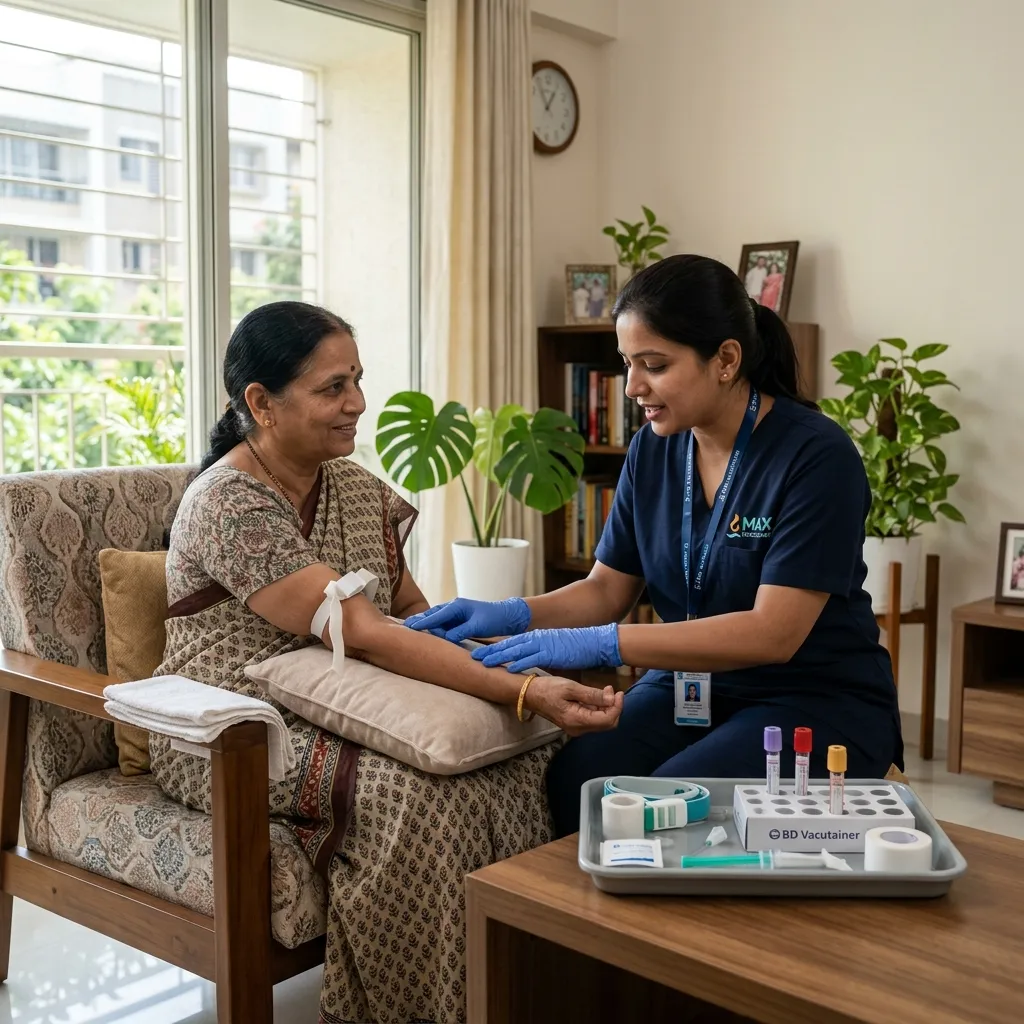
BookMyPatho coordinates precise, time-sensitive prenatal blood collection at home across Delhi NCR with prompt NABL lab processing.
Recommended Lab Tests & Packages to Book at Home
If you or a loved one are experiencing these symptoms, you can book these diagnostic tests directly with BookMyPatho. Our trained phlebotomists collect samples from your doorstep across Delhi NCR with digital reports delivered within 12 hours:
- Quadruple Marker Prenatal Screen: Second-trimester screening (AFP, hCG, uE3, Inhibin-A) for chromosomal risk.
- Double Marker Test (First Trimester): Early 11 to 13-week prenatal screen combining Free Beta hCG and PAPP-A.
- Thyroid & Diabetes Prenatal Panel: Ensures optimal maternal metabolic health during gestation.
Have questions or need assistance selecting the right package? Call or WhatsApp our Delhi NCR health desk at +91-8700227153.