Polycystic Ovary Syndrome (PCOS) is a hormonal disorder that is reaching epidemic proportions among young Indian women. It is estimated that 1 in 5 women in India suffers from PCOS, yet countless cases remain undiagnosed because the symptoms are often dismissed as 'normal' female troubles.
\n\nThe Web of Symptoms
\n\nPCOS is a syndrome, meaning it's a collection of symptoms that vary from woman to woman. The most common signs include:
\n- \n
- Irregular Periods: Infrequent, unpredictable, or prolonged menstrual cycles. \n
- Excess Androgen: Elevated levels of male hormones resulting in severe acne and excess facial or body hair (hirsutism). \n
- Unexplained Weight Gain: Especially around the abdomen, and extreme difficulty losing weight due to insulin resistance. \n
- Hair Thinning: Male-pattern baldness or significant hair shedding. \n
How is PCOS Diagnosed?
\n\nThere is no single test for PCOS. Your doctor will look at your medical history, perform a physical exam, and rely heavily on two diagnostic tools:
\n- \n
- Pelvic Ultrasound: To check the appearance of your ovaries for the presence of multiple small cysts (follicles). \n
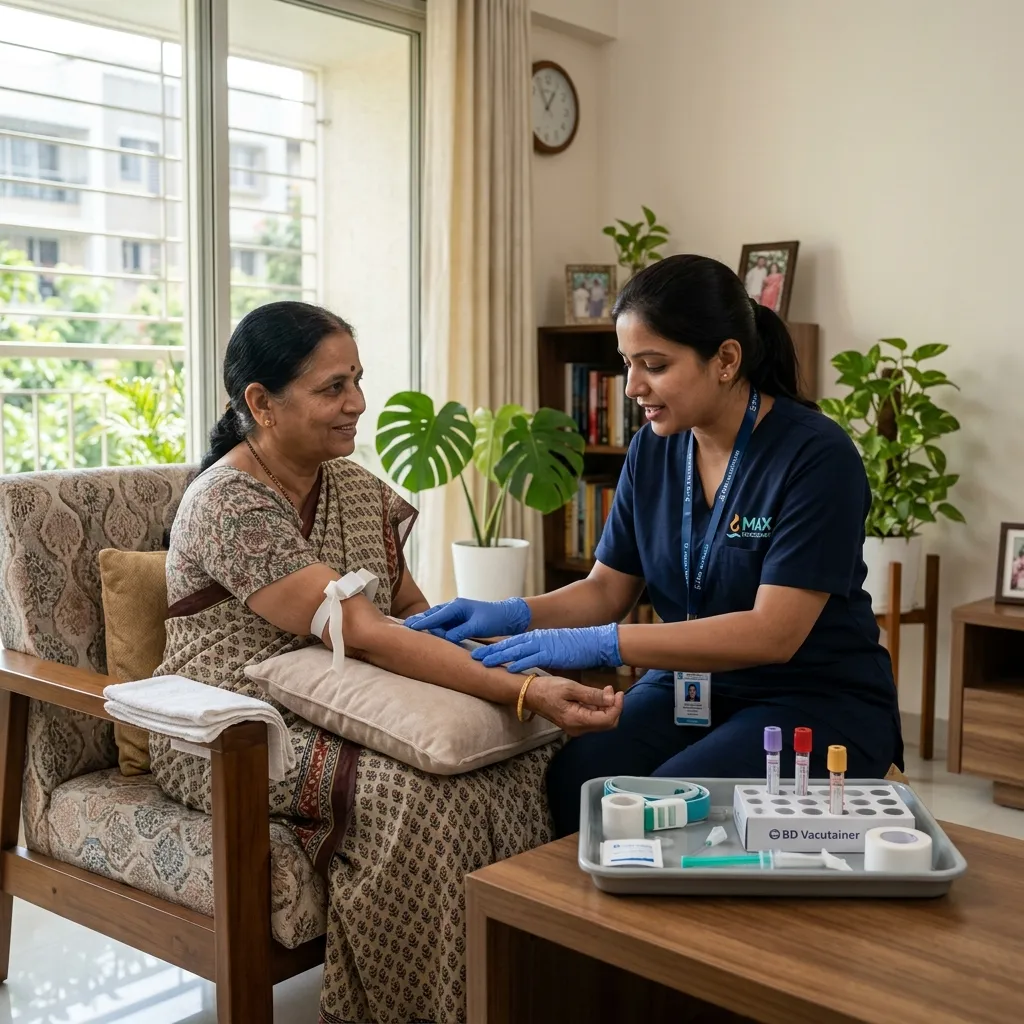
- Blood Tests: To measure hormone levels. Crucial tests include Testosterone, Luteinizing Hormone (LH), Follicle-Stimulating Hormone (FSH), Prolactin, and Thyroid (TSH). Because PCOS is tightly linked to insulin resistance, a fasting blood sugar or HbA1c test is also mandatory. \n
If you suspect you have PCOS, don't suffer in silence. Book a comprehensive female hormone profile with BookMyPatho to get the precise data your gynecologist needs to create a treatment plan.