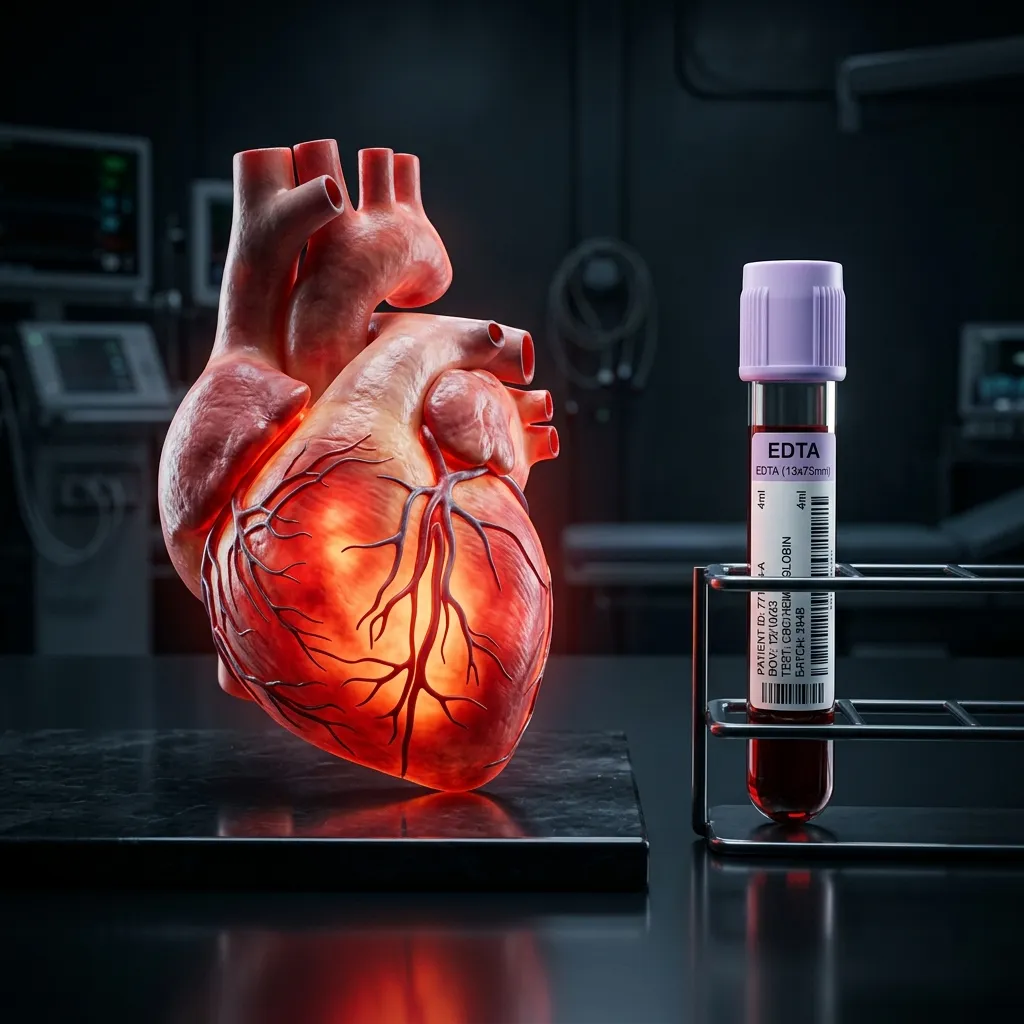
We've all heard the tragic stories. A 45-year-old man, a marathon runner with a strict diet, suddenly drops dead from a massive heart attack. His family is in shock. His doctor is baffled. "But his cholesterol was perfectly normal!" they say.
How does someone with normal cholesterol have a heart attack? Because we've been looking at the wrong villain. For decades, we've blamed cholesterol as the sole cause of heart disease. But modern cardiology has discovered that cholesterol is only half the story. The real silent killer? Inflammation.
And the test that finds it is called hs-CRP (High-Sensitivity C-Reactive Protein).
Why Cholesterol Needs an Accomplice
Imagine your blood vessels are smooth Teflon pipes. If you have high cholesterol (LDL), it floats through these pipes. But if the pipes are smooth, the cholesterol just washes right through. It doesn't stick.
Now, imagine those pipes get inflamed and scratched up (due to smoking, stress, high blood sugar, or processed foods). That inflammation acts like velcro. Suddenly, the passing cholesterol gets stuck to the inflamed walls. Over time, it builds up into a plaque, blocking the artery. Eventually, that plaque ruptures, causing a blood clot. That clot is a heart attack.
If you don't have inflammation, cholesterol struggles to stick to your arteries. This is why half of all heart attack patients actually have "normal" cholesterol levels. Their cholesterol wasn't high, but their inflammation was off the charts.
Enter the hs-CRP Test
Your liver produces C-Reactive Protein (CRP) whenever there is inflammation in your body. The "high-sensitivity" version of this test (hs-CRP) can detect tiny, microscopic levels of inflammation smoldering specifically in your blood vessels.
| hs-CRP Level | Your Cardiac Risk |
|---|---|
| Less than 1.0 mg/L | Low Risk: Your arteries are calm and happy. |
| 1.0 to 3.0 mg/L | Average Risk: Some inflammation is present. |
| Above 3.0 mg/L | High Risk: Your blood vessels are inflamed. You need to consult a cardiologist. |
Who Absolutely Needs This Test?
You should add an hs-CRP test to your next health checkup if:
- You have a family history of heart disease, even if your own cholesterol is normal.
- You have high belly fat (visceral fat is a massive driver of inflammation).
- You have a high-stress lifestyle or suffer from poor sleep.
- You are pre-diabetic or have high blood pressure.
The hs-CRP test is a simple blood draw. No fasting is required, though it is usually paired with a fasting Lipid Profile for a complete cardiac picture. Don't rely on half the story. Book a comprehensive Cardiac Risk Panel at home today, and find out what's really happening inside your arteries.