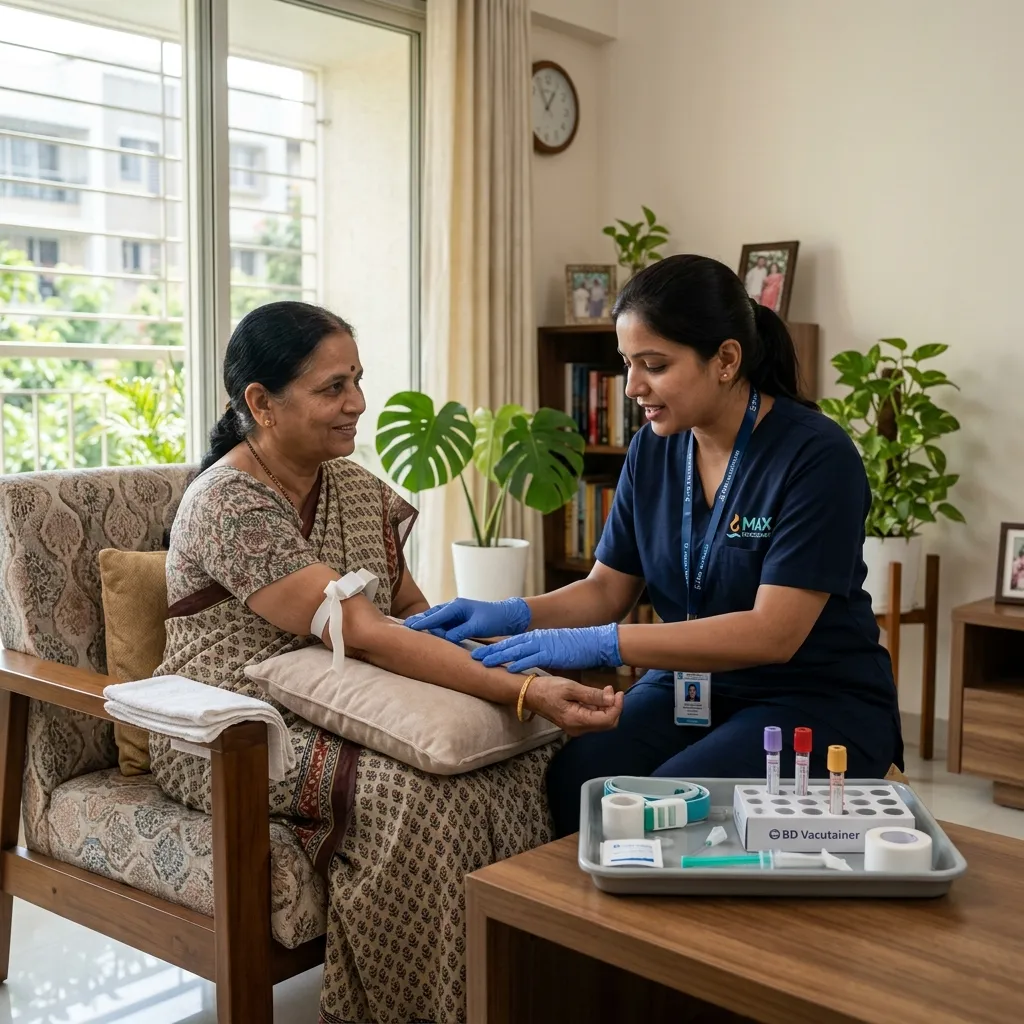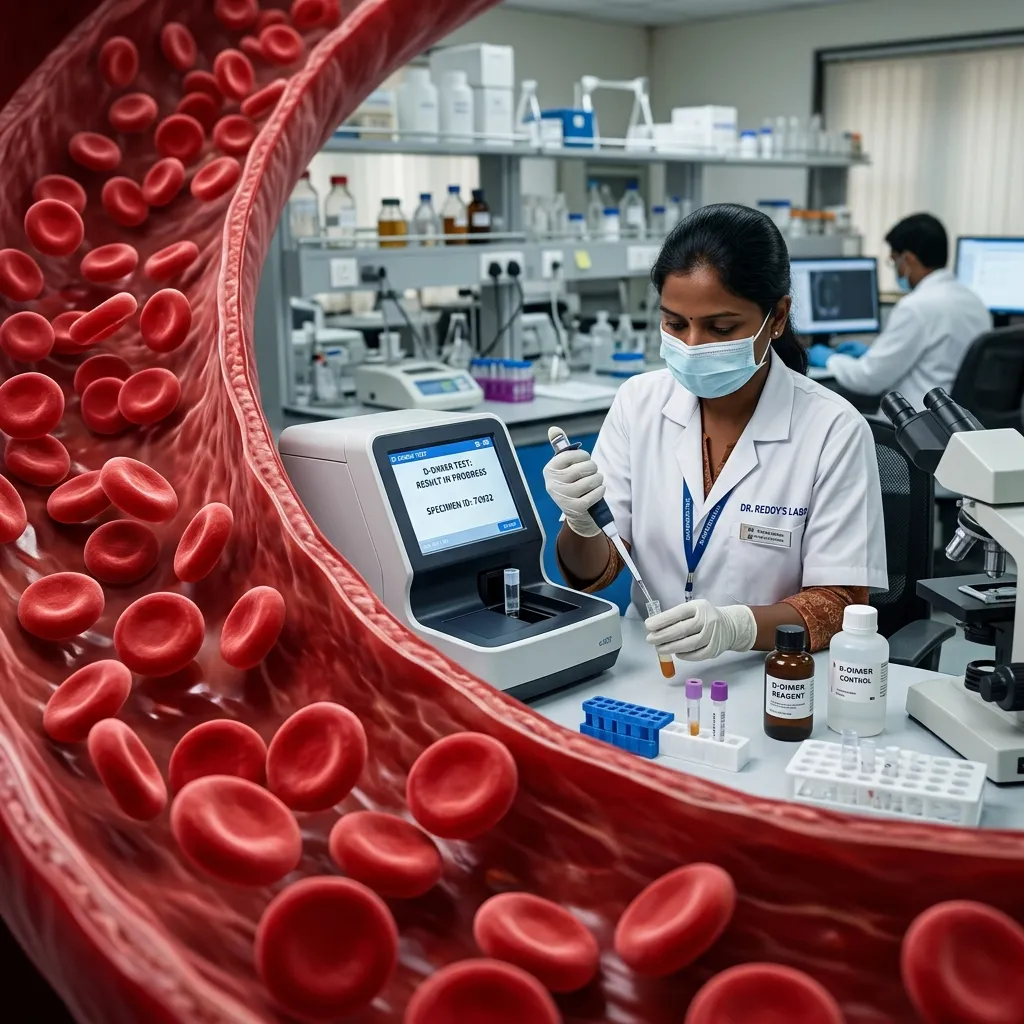
When you get a cut, your blood clots to stop the bleeding—this is a life-saving process. But when blood clots form inappropriately inside your veins, they become life-threatening. A clot in the leg (Deep Vein Thrombosis or DVT) can break loose and travel to the lungs (Pulmonary Embolism), which is a massive medical emergency.
\n\nWhat is D-Dimer?
\n\nWhen a blood clot starts to dissolve, it leaves behind protein fragments in the blood. One of these fragments is called D-Dimer. If you have a significant blood clot forming and breaking down somewhere in your body, your D-Dimer levels will be highly elevated.
\n\nHow Doctors Use the Test
\n\nThe D-Dimer test is primarily used in emergency rooms to rule out serious clotting issues. If you go to the ER with chest pain or a swollen, painful leg, and your D-Dimer test is normal (negative), the doctor can be very confident that you do not have a massive blood clot. It's a fantastic exclusion tool.
\n\nHowever, a high D-Dimer does not automatically mean you have a dangerous clot. D-Dimer can also be elevated due to recent surgery, pregnancy, severe infection, or high systemic inflammation. If it is high, the doctor will order imaging (like an ultrasound or CT scan) to find the actual clot.