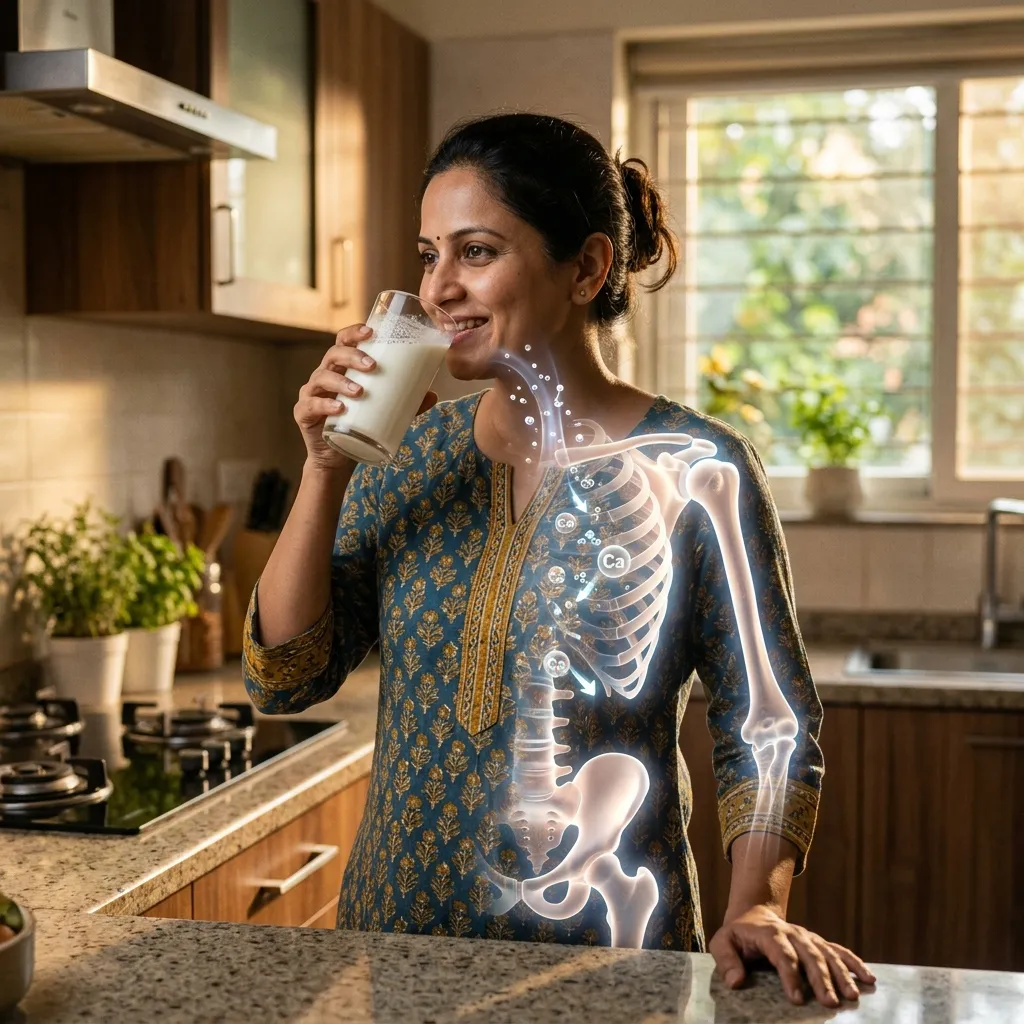
When you hear 'calcium,' you immediately think 'bones.' And while it's true that 99% of your body's calcium is stored in your bones and teeth, that remaining 1% found in your blood and soft tissues is absolutely critical for keeping you alive.
\n\nThe Critical 1 Percent
\n\nCalcium is essentially the body's electrical wiring. It is required for muscle contractions, nerve signaling, and blood clotting. Most importantly, it is the mineral that tells your heart muscle to contract. If the calcium levels in your blood drop too low, your heart can develop dangerous arrhythmias.
\n\nThis is why, if your diet lacks calcium, your body will ruthlessly steal it from your bones to maintain the blood levels—leading to osteoporosis over time.
\n\nSigns of Hypocalcemia (Low Calcium)
\n\nMild deficiency might not cause symptoms, but as it worsens, you might experience:
\n- \n
- Muscle cramps and spasms (especially in the back and legs) \n
- Tingling or numbness in the fingers, toes, and around the mouth \n
- Confusion or memory loss \n
- Brittle nails and dry skin \n
Total vs. Ionized Calcium Tests
\n\nA standard Total Calcium test measures all the calcium in your blood, including calcium attached to proteins. However, the 'active' calcium that your body can actually use is free-floating. An Ionized Calcium test measures only this free calcium and is a much more accurate reflection of your true calcium status. Get your comprehensive bone health profile tested today with BookMyPatho.